If you are searching for how to start an online business for beginners, you have probably already noticed that most advice skips the part where you are sitting in front of a blank screen with no idea what to do first. This article covers that part. It walks through five decisions in the order you actually have to make them, then shows what the first 30 days involve.
None of it requires experience, a special skill, or money for inventory. It does require regular time and a willingness to publish work that is not perfect.
Why most beginners stall before they begin
Beginners rarely stop because the work is too hard. They stop because they try to decide everything at once: the niche, the business name, the logo, the platform, the best way to earn. Each of those questions feels like it has a wrong answer, so none of them gets answered.
Meanwhile, the reading piles up. Another video about niches, another list of tools, another comparison of website builders. It feels like progress because you are learning, but nothing exists at the end of it.

You can skip most of this by treating the start as five separate decisions, made one at a time:
- Choose a topic you can stay with.
- Learn the basics of how an online business works.
- Build a simple website.
- Publish your first pieces of content.
- Work on getting found and earning.
Each decision is small, and each one has a fairly clear answer once you stop trying to solve the others. Your first topic does not have to be your last. Your first website does not have to be beautiful. You are building the habit of finishing things, and a half-right choice that you act on teaches you more than a perfect one you are still researching.
Step 1: Choose a topic you can write about for a year
Your website will be built around one subject, and you will be producing content about it for a long time. That makes staying power the most useful test for a topic. A topic that sounds profitable but bores you will be abandoned by month two.
Three questions help narrow it down:
- Could you list 20 questions a beginner might ask about it? If you can, you will not run out of things to write. If you struggle to reach ten, the topic is probably too narrow.
- Would you still be willing to read about it after a hundred articles? Interest that survives repetition matters more than excitement on day one.
- Do people spend money in this area? People buy products, courses, equipment, software and services around many subjects. If nobody ever pays for anything related to your topic, earning from it will be difficult.
You do not need to be an expert. You need to be a few steps ahead of the person you are writing for, and willing to research honestly. Someone who is learning a subject and documenting what they find is often more useful to a beginner than someone who forgot what being confused felt like.
Be specific enough that a reader knows who the site is for. “Fitness” is a huge area with enormous competition. “Home workouts for people over 50” tells a visitor immediately whether they are in the right place. A narrower focus also makes it easier for a new site to be found.

Write down your topic and the audience in one sentence, then move on. If it turns out to be a poor fit after a few weeks of writing, adjusting it is far cheaper than never starting.
Step 2: Learn the basics before you build anything
Many beginners either build too early, with no idea how websites attract visitors, or learn too long and never build. The middle path is to learn the essentials first, in a fixed amount of time, and then start.
The essentials fall into a few areas:
- How people find websites. Most visitors arrive through search engines, social platforms or video. For a new site, search is usually the main source, so it helps to understand how people phrase what they look for.
- How content is written to match a search. Each article answers one question or covers one subject clearly. Keywords are the words people type, and they guide what you write about.
- How a website earns. The common routes are affiliate marketing (recommending products and earning a commission when someone buys through your link), advertising, and selling your own products or services. Affiliate marketing is the usual starting point because you do not have to create or ship anything.
- The basic parts of a site. A domain name, hosting, pages and posts, and a theme that controls the look.
You can learn this from free articles and videos, but the quality varies and the order is often scrambled. A structured set of lessons saves you the work of figuring out what to study next. This is one reason many beginners look at a platform like Wealthy Affiliate, which puts lessons, website hosting and a community of members in one place. You can decide for yourself whether that suits you, and the closing section explains how to try it without committing money.
Whichever route you choose, set a limit. A week of focused learning is enough to start building. The rest you will learn faster by doing it with a real site open in front of you.
Step 3: Set up your first simple website
The website is your home base. You own it, you control it, and no social platform can change its rules and take it away. That makes it worth the setup effort, and the setup is smaller than it sounds.
You need four things:
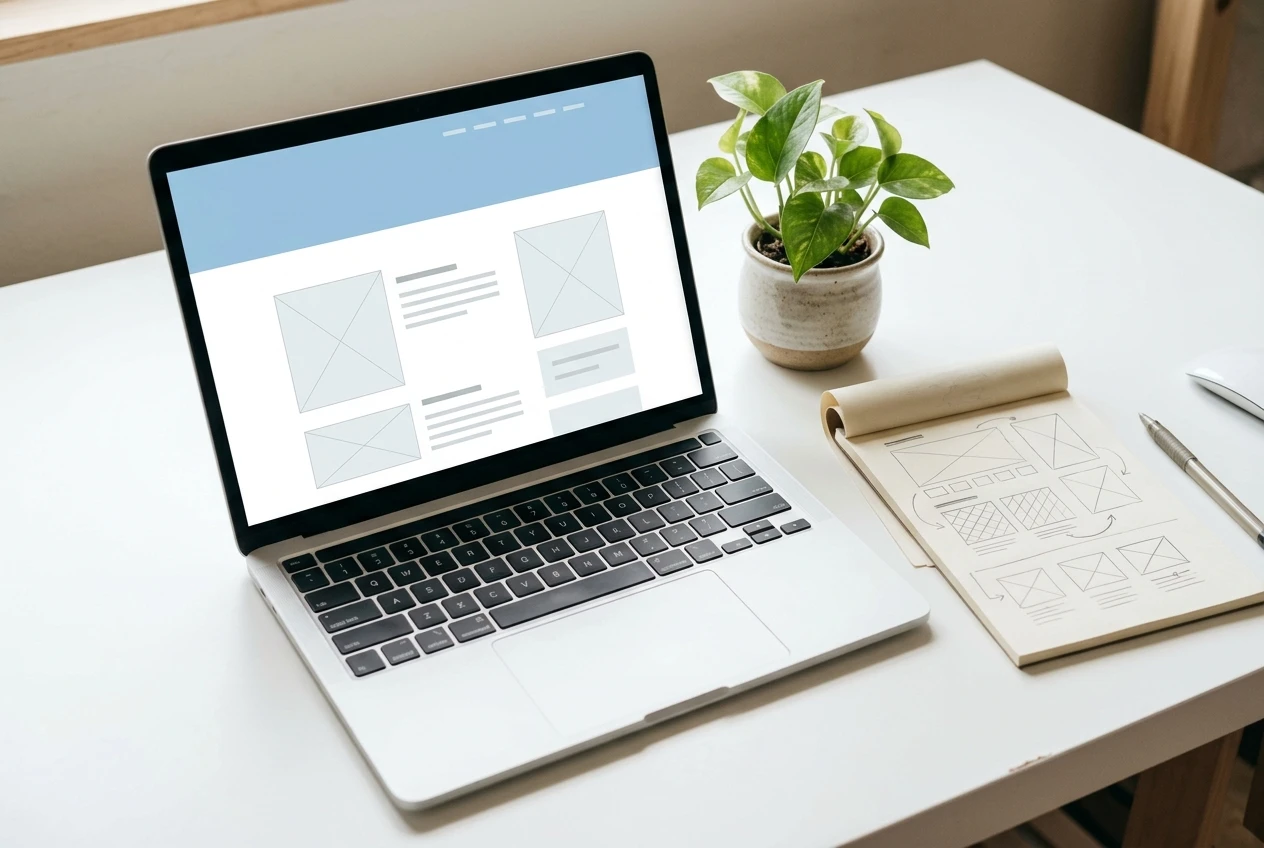
- A domain name. This is your web address. Short names that are easy to say and spell work best. A name that hints at your topic helps, but a memorable name matters more than a perfectly descriptive one.
- Hosting. This is the service that stores your site and delivers it to visitors. Reliable hosting keeps your pages loading properly.
- A website platform. WordPress is widely used for content sites, and a large number of themes and guides exist for it.
- A clean theme. Choose a simple, readable layout. Fancy designs add setup time and often slow the site down.
Then create only the pages you need at the start:
- A home page that says in a sentence or two what the site is about and who it helps.
- An About page that tells visitors about the site and what they will find. Write it about the reader and the topic.
- A contact page so people can reach you.
- A privacy policy and an affiliate disclosure, which matter once you start recommending products. Requirements differ by country, so check the rules where you live.
Resist spending days on colors and logos. Visitors care whether your pages are readable and useful. You can refine the design later, once you have content worth presenting.
If you prefer not to assemble the pieces yourself, an all-in-one platform that includes hosting removes several separate decisions. That is the main convenience of choosing a guided option: fewer accounts, fewer settings, and one place to ask when something does not work.
Step 4: Publish your first three pieces of content
Content is what a visitor actually reads, and it is also what search engines have to work with. Without articles, a site has nothing to be found for. So the next job is simple: publish three pieces.
Three is a deliberate number. It is small enough to finish in a week or two, and large enough to give you a rough sense of how long an article takes, what you find easy, and where you get stuck.
Choose topics by asking what a beginner in your niche would type into a search box. Good first articles often take one of these forms:
- A how-to, such as “How to set up a weekly meal plan on a small budget.”
- A beginner’s guide, which explains a subject from the starting point.
- A comparison or review, which helps someone choose between two options.
- An answer to a specific question, written directly and without padding.
A reliable structure for each article:
- Open with a short paragraph that tells the reader what they will get.
- Use headings so people can scan to the part they need.
- Keep paragraphs short and write in plain language.
- Finish with a clear next step, such as a related article or a recommendation.
Your first articles will not be your best. That is expected, and you can edit them later. Search engines and readers respond to useful, honest content, and you get better at producing it only by writing more of it.
Aim for accuracy. Do not invent facts, results or prices. If you recommend a product, describe what it does and who it suits based on what you can verify, and say plainly when something is not a good fit. Readers who trust you will come back, and trust is the asset that earns over the long run.
If writing feels slow at the start, that is normal. Most people get faster with each piece, and having a defined topic and a list of questions to answer removes much of the hesitation.
Step 5: Help people find you and earn from it
Once a few pieces are live, the work shifts to getting them in front of readers. This stage is slower than most beginners expect, so it helps to know what moves things forward.
Keep publishing. Each new article is another chance to be found for a different search. A site with 40 useful pages has far more ways for a visitor to arrive than a site with three.
Write for specific searches. Articles that answer narrow, specific questions are usually easier for a new site to be found for than broad topics dominated by large, established websites.
Link your pages together. When one article mentions a subject you have covered elsewhere, link to it. That helps visitors move around the site and helps search engines understand how your content connects.
Use other channels to bring early visitors. Short videos, social posts and a channel on a video platform can send people to your site while search engines are still getting to know it. Each one can point back to an article that goes deeper.
Add ways to earn once there is something to recommend. With affiliate marketing, you join a program, get a unique link, and place it where a recommendation makes sense for the reader. When someone buys through the link, you earn a commission. Some programs pay once, and some pay recurring commissions for as long as the customer stays subscribed. Read each program’s terms before you promote it.
Be realistic about timing. Search traffic generally builds gradually, and a new site can take months before it attracts steady visitors. Earnings depend on your topic, the quality of your content, how consistently you publish, and plenty of factors outside your control. No one can honestly promise a specific result, and you should be wary of anyone who does.
What your first 30 days honestly look like
A month is enough to get everything set up and to publish a small body of work. It is not enough to judge whether the business will succeed. Here is a plan that fits around other commitments, assuming you can spare a bit of time most days.

Week 1: Choose and learn
Pick your topic and write your one-sentence description of who the site helps. Then spend the rest of the week on the basics: how search works, how content is structured, and how websites earn. Take notes on questions your audience might ask, because those become article ideas.
Week 2: Build
Register your domain, set up hosting and install your platform. Pick a clean theme and create your home, About, contact and policy pages. Keep it plain. By the end of the week, the site should be live, even if it looks basic.
Week 3: Write
Draft and publish your first two articles. Expect each one to take longer than you planned. Check spelling, make sure the headings make sense, and read each piece aloud once to catch awkward sentences.
Week 4: Publish and share
Publish your third article, then link your three pieces to each other where it makes sense. Draft a list of 15 to 20 more article ideas so you never face a blank page. If you want, create a short video or a social post that points to one of your articles.
At the end of the 30 days you will have a live website, three published pieces, and a repeatable way of working. You probably will not have meaningful traffic or income yet, and that is typical. What you have gained is a working process and evidence that you can follow through, which is the real starting line for an online business.
The people who see results from a site like this are generally the ones who keep going past the point where nothing seems to happen. Consistent publishing, month after month, matters more than a strong first week.
Where to go next if you want a guided path
You can follow every step in this article on your own using free resources. The main cost is time spent working out the order and fixing problems without anyone to ask.
Wealthy Affiliate is one way to shorten that. It brings lessons, website hosting and a member community into a single place, so the learning, the building and the questions all happen in the same account. It is built around the same sequence covered here: choose a niche, learn how it works, build a site, publish content and grow from there.
The simplest way to find out whether it suits you is to try it without pressure. You can start a free Wealthy Affiliate account and work through the first lessons at your own pace. Treat it as a low-risk way to test the steps in this article, see how the lessons feel, and decide later whether you want to go further.
A note on transparency: this site is run by a Wealthy Affiliate member and earns a referral commission if you join through its links. That does not change the price you pay, and the steps above apply whichever route you take. Start with the first decision, choose your topic, and write it down today.